

 Moderator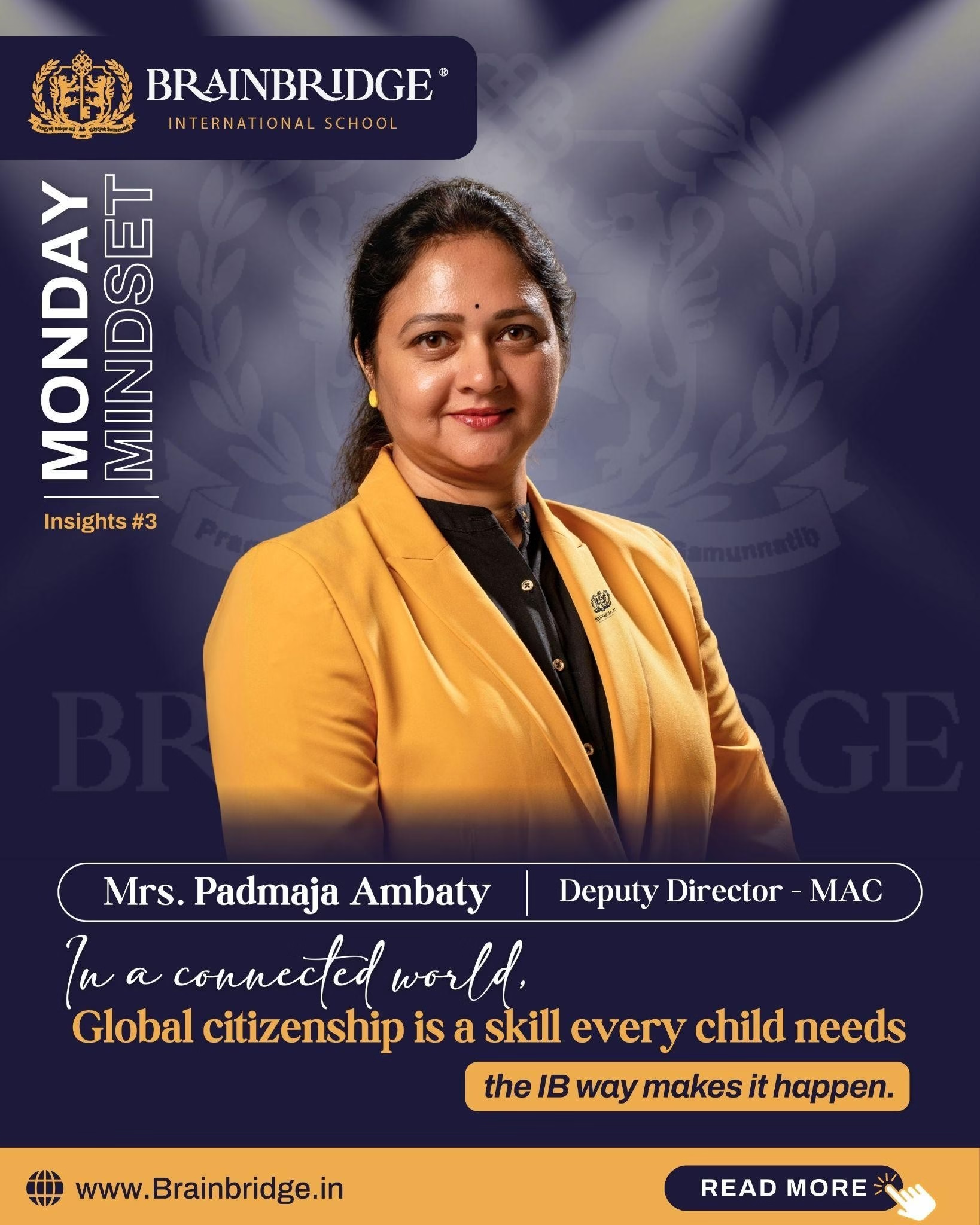
Preparing children to thrive in a world without borders
By Mrs. Padmaja, Deputy Director – MAC.
When I think of the world our children are growing into, I am reminded of something my grandmother often said: “The world is bigger than your street, but it begins with how you treat your neighbor.”
That wisdom feels even more relevant today. In a world where borders blur and cultures intertwine, education is no longer just about academics — it is about raising young people who can understand, respect, and collaborate with others, no matter where life takes them.
At Brainbridge, we believe cultural empathy, adaptability, and open-mindedness aren’t soft skills. They are survival skills. And they are what the IB approach nurtures in every learner.
Lessons from Everyday Life
A young student once asked me, “Why does my friend bring food I’ve never seen before?” That curiosity sparked a class project where children shared family recipes, mapped the countries they came from, and discovered how spices, stories, and traditions connect us across continents.
It wasn’t just about food. It was about learning that difference doesn’t divide — it enriches.
Mahatma Gandhi once said, “Our ability to reach unity in diversity will be the beauty and the test of our civilization.” For children, that lesson begins in small, simple moments of curiosity and kindness.
From Classrooms to the World
Global citizenship in education means giving children opportunities to step beyond textbooks:
- Writing letters to peers in another country.
- Debating climate change from multiple cultural perspectives.
- Reading stories from authors around the world.
- Practicing empathy by seeing the world through someone else’s eyes.
Think of Malala Yousafzai, who turned her experience in a small town into a global movement for girls’ education. Or Kailash Satyarthi, who started by rescuing one child from child labor, and ended up inspiring change across nations. Their stories remind us that even young voices can reshape the world.
Building Adaptability and Respect
Global citizens are not people who know everything. They are people who know how to listen, adapt, and lead with respect. In today’s classrooms, that might look like a child learning to collaborate with someone who doesn’t speak their first language, or navigating a project with peers who see the world differently.
Those moments plant the seeds of resilience, humility, and confidence.
Raising Leaders of Tomorrow
We cannot predict what careers our children will choose, or which countries they may live in. But we can prepare them with the values and skills to thrive anywhere:
- Cultural empathy: seeing strength in diversity.
- Adaptability: navigating change with confidence.
Open-mindedness: welcoming new ideas, people, and perspectives.
As Nelson Mandela said, “Education is the most powerful weapon which you can use to change the world.” For us, the most powerful education is one that equips children to change not just their own world, but the world we all share.
At Brainbridge, raising global citizens is not a slogan. It is our daily practice. Every story told, every perspective shared, every collaboration attempted is part of a bigger journey — one where children learn that their voices matter, their choices count, and their futures are connected to the futures of others.
And in that connection lies the hope of a more compassionate, inclusive, and resilient world.